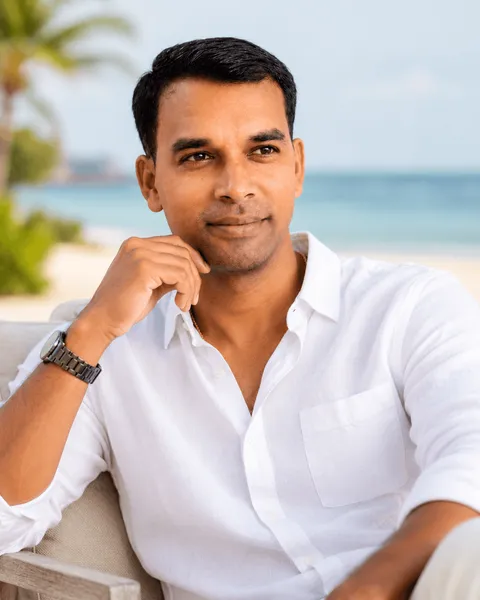
I didn't set out to become a search strategist. I set out to understand how a system decides what's worth trusting, and every job since has just been a different room to ask that question in.
I trained as an electronics and communication engineer. My first job was a network engineer, setting up IT and network infrastructure for franchise locations of McDonald's and KFC, among others, and what stuck wasn't the hardware. It was watching individual machines negotiate trust with each other to form something larger than any one of them. That question followed me everywhere after.
It followed me into digital marketing, running technical SEO audits for local businesses. The lesson was the same one, in a different room: powerful systems are usually just a few simple principles, applied consistently, at scale. Get the fundamentals right and one client saw a 530% jump in organic traffic. That became the lens I bring to every company since.
At AdNabu, I owned organic growth end to end for a B2B SaaS company serving Shopify merchants: 25x traffic growth, a 4.7x increase in ranking keywords, and the first real lesson in what it takes to build a search program leadership actually trusts, not just one that ranks.
Then AI search arrived, and the question changed shape again. Not just "will a person find this," but "will a machine trust it enough to repeat it." At Atlan, I built the AI-first content system that answered that: new pages reaching top-3 rankings in 3 days, earning citations across Google AI Overviews, ChatGPT, Perplexity, Claude, and Gemini within 8 days, with organic carrying a third of total pipeline through the company's 7x growth from Series B to Series C.
These days I work independently, as founder of RKarthik AI Labs: a fractional AEO/GEO/SEO strategist for B2B SaaS teams, doing the same work I did in-house, for companies that need the system built, not just audited. I still build in public: The Uncomfortable Truths of Organic Growth, a 12-chapter framework on why the old SEO playbook broke; an automated directory of 100,000+ Shopify stores that grows on its own as new stores launch; a positioning system for technical founders. I'd rather ship the thing than explain why it can't be done.
Every engagement runs on the same instinct I had watching those machines negotiate trust: find and cure the underlying problem, not its symptoms. Everything else here is just where I've pointed that instinct next.
I hold the AMA's Generative AI for Marketing Professional certification, I'm working toward its full Professional Certified Marketer qualification, and I study agentic AI systems the way I used to study server logs: closely, and usually after everyone else has stopped looking. Outside of work, it's family, a garden that mostly cooperates, running, and more homework help than I expected to still be doing.
Most of what I'm learning right now goes into AI Visibility, Verified: a daily newsletter on what actually moves AI search visibility, verified against primary research instead of vendor pitches. Details below.